Tuesday, December 05, 2006

What Will History Say?
He's The Worst Ever

(As a former history teacher I am always interested in presidential rankings. I once played a game with my students with that row of presidential portraits that was tacked above the chalkboard in my classroom. Instead of viewing them in chronological order, place in order of greatness and defend the position. Well, a lively discussion ensued from 10th grade students. This story from the Washington Post is about W's place in history.)

By Eric Foner
Sunday, December 3, 2006

Ever since 1948, when Harvard professor Arthur Schlesinger Sr. asked 55 historians to rank U.S. presidents on a scale from "great" to "failure," such polls have been a favorite pastime for those of us who study the American past.

Changes in presidential rankings reflect shifts in how we view history. When the first poll was taken, the Reconstruction era that followed the Civil War was regarded as a time of corruption and misgovernment caused by granting black men the right to vote. As a result, President Andrew Johnson, a fervent white supremacist who opposed efforts to extend basic rights to former slaves, was rated "near great." Today, by contrast, scholars consider Reconstruction a flawed but noble attempt to build an interracial democracy from the ashes of slavery -- and Johnson a flat failure.

More often, however, the rankings display a remarkable year-to-year uniformity. Abraham Lincoln, George Washington and Franklin D. Roosevelt always figure in the "great" category. Most presidents are ranked "average" or, to put it less charitably, mediocre. Johnson, Franklin Pierce, James Buchanan, Warren G. Harding, Calvin Coolidge and Richard M. Nixon occupy the bottom rung, and now President Bush is a leading contender to join them. A look at history, as well as Bush's policies, explains why.

At a time of national crisis, Pierce and Buchanan, who served in the eight years preceding the Civil War, and Johnson, who followed it, were simply not up to the job. Stubborn, narrow-minded, unwilling to listen to criticism or to consider alternatives to disastrous mistakes, they surrounded themselves with sycophants and shaped their policies to appeal to retrogressive political forces (in that era, pro-slavery and racist ideologues). Even after being repudiated in the midterm elections of 1854, 1858 and 1866, respectively, they ignored major currents of public opinion and clung to flawed policies. Bush's presidency certainly brings theirs to mind.

Harding and Coolidge are best remembered for the corruption of their years in office (1921-23 and 1923-29, respectively) and for channeling money and favors to big business. They slashed income and corporate taxes and supported employers' campaigns to eliminate unions. Members of their administrations received kickbacks and bribes from lobbyists and businessmen. "Never before, here or anywhere else," declared the Wall Street Journal, "has a government been so completely fused with business." The Journal could hardly have anticipated the even worse cronyism, corruption and pro-business bias of the Bush administration.

Despite some notable accomplishments in domestic and foreign policy, Nixon is mostly associated today with disdain for the Constitution and abuse of presidential power. Obsessed with secrecy and media leaks, he viewed every critic as a threat to national security and illegally spied on U.S. citizens. Nixon considered himself above the law.

Bush has taken this disdain for law even further. He has sought to strip people accused of crimes of rights that date as far back as the Magna Carta in Anglo-American jurisprudence: trial by impartial jury, access to lawyers and knowledge of evidence against them. In dozens of statements when signing legislation, he has asserted the right to ignore the parts of laws with which he disagrees. His administration has adopted policies regarding the treatment of prisoners of war that have disgraced the nation and alienated virtually the entire world. Usually, during wartime, the Supreme Court has refrained from passing judgment on presidential actions related to national defense. The court's unprecedented rebukes of Bush's policies on detainees indicate how far the administration has strayed from the rule of law.

One other president bears comparison to Bush: James K. Polk. Some historians admire him, in part because he made their job easier by keeping a detailed diary during his administration, which spanned the years of the Mexican-American War. But Polk should be remembered primarily for launching that unprovoked attack on Mexico and seizing one-third of its territory for the United States.

Lincoln, then a member of Congress from Illinois, condemned Polk for misleading Congress and the public about the cause of the war -- an alleged Mexican incursion into the United States. Accepting the president's right to attack another country "whenever he shall deem it necessary," Lincoln observed, would make it impossible to "fix any limit" to his power to make war. Today, one wishes that the country had heeded Lincoln's warning.

Historians are loath to predict the future. It is impossible to say with certainty how Bush will be ranked in, say, 2050. But somehow, in his first six years in office he has managed to combine the lapses of leadership, misguided policies and abuse of power of his failed predecessors. I think there is no alternative but to rank him as the worst president in U.S. history.

efoner@aol.com

Eric Foner is DeWitt Clinton professor of history at Columbia University.

Congratulations Lindsey and Darrell

On a second note of personal privilege, I want to say congratulations to the ODP's very special projects coordinator Lindsey Cox. She married her sweetheart Darrell Coster this weekend in Las Vegas!
Happy Birthday Mom!

I'm taking a note of personal privilege today to say Happy Birthday to my mom. She's the one who taught me the value of the beautitudes, not by taking me to church (although she did that), by the way she's lived her life and how she's treated people. While always expecting the very best from us, she demonstrated the care and compassion, the listening and support, that make a person whole. In fact, she taught me most everything I needed to know including a deep curiosity for learning. Thanks mom on your special day.

Message From A Megachurch
Retailing Hope

By E. J. Dionne Jr.
Tuesday, December 5, 2006

American politics took an important turn last week at a church in the foothills of Southern California's Santa Ana Mountains.

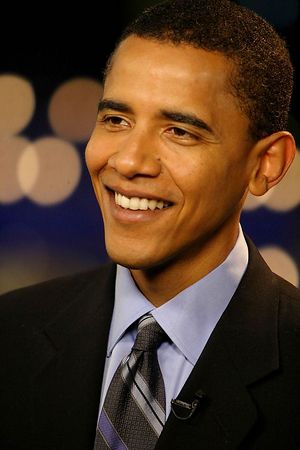
When Rick Warren, one of the nation's most popular evangelical pastors, faced down right-wing pressure and invited Sen. Barack Obama to speak at a gathering at his Saddleback Valley Community Church about the AIDS crisis, he sent a signal: A significant group of theologically conservative Christians no longer wants to be treated as a cog in the Republican political machine.

For his part, Obama, the former community organizer from Chicago, showed why he is this moment's hottest commodity in 2008 presidential politics, even though he has not entered the race yet.

For a quarter-century since the rise of the Moral Majority and the Christian Coalition, white evangelical Christians have been widely seen as a Republican preserve. No one did a more comprehensive job of organizing them than President Bush, and he carried the white evangelical vote in 2004 over John Kerry by a ratio of nearly 4 to 1. Many of the most politically active evangelical leaders have insisted that the morally freighted social issues -- abortion, stem-cell research, same-sex marriage -- took priority over all questions.

Enter Warren, or Pastor Rick, as he likes to be known. Warren is no political liberal. On the contrary, his views on the hot-button issues are reliably conservative, and he has said that members of his sprawling Orange County congregation probably vote overwhelmingly Republican.

But Warren speaks for a new generation of evangelicals who think that harnessing religious faith too closely to electoral politics is bad for religion, and who are broadening the evangelical public agenda to include a concern for global poverty and the scourge of AIDS.

Warren is also the most gifted religious entrepreneur since Billy Graham. Warren's book "The Purpose Driven Life" has sold in the tens of millions, and his specific model for the megachurch has spread all over the country. He is not building a new denomination. He is building a new network, and it's powerful. Warren and his wife, Kay, have made alleviating the AIDS crisis in Africa one of the central components of their mission.

And thus it came to pass that when Warren called a conference at his church last Friday on World AIDS Day, among those he invited were two potential presidential candidates. It was unsurprising that one of them was Sen. Sam Brownback, the Kansas Republican and a loyal social conservative who has taken up the AIDS issue with passion and commitment.

But when the other invitee turned out to be Obama, parts of the old evangelical political apparatus went after Warren as a heretic. Rob Schenck, president of the National Clergy Council, declared that Obama's views on abortion -- Obama is pro-choice -- represented "the antithesis of biblical ethics and morality" and insisted that Warren had no business inviting him to Saddleback.

Warren's church issued a statement reaffirming its strong opposition to abortion, but Warren did not back down. Indeed, he seemed to revel in rejecting the old evangelical political model. "I'm a pastor, not a politician," Warren told ABC News. "People always say, 'Rick, are you right wing or left wing?' I say 'I'm for the whole bird.' "

When it came his turn to speak, Obama took on the moral message of evangelical AIDS activists -- and then challenged them.

"Let me say this and let me say this loud and clear: I don't think that we can deny that there is a moral and spiritual component to prevention," he declared. "In too many places . . . the relationship between men and women, between sexuality and spirituality, has broken down and needs to be repaired."

Then Obama got to what "may be the difficult part for some," as he put it, that "abstinence and fidelity, although the ideal, may not always be the reality."

"We're dealing with flesh-and-blood men and women, and not abstractions," Obama said, and "if condoms and potentially things like microbicides can prevent millions of deaths, then they should be made more widely available. . . . I don't accept the notion that those who make mistakes in their lives should be given an effective death sentence."

That Obama received a standing ovation suggests that Warren is right to sense that growing numbers of Christians are tired of narrowly partisan politics and share his interest in "the whole bird." In their different spheres, Warren and Obama are both in the business of retailing hope.

One more thing: If you read Obama's speech, you'll realize he demonstrates a much truer Christian spirit than the GOP masterminds who have recently tried to push people away from Obama by pointing out that his middle name is Hussein.

Monday, December 04, 2006

Oklahoma's Democratic National Committeemen and National Committeewomen

Since 1978 eight individuals have represented Oklahoma Democrats as National Committeeman and National Committeewoman. They are:

George Krumme (Bristow)
Edna Mae Phelps (Seminole)
Hannah Atkins (OKC)
Lou Watkins (Ada)
Sen. Vicki MIles-LaGrange (OKC)
Glorene Henley (OKC)
James E. Frasier (Tulsa)
Betty McElderry (Purcell)

These positions are filled by election every four years by a majority vote of delegates to a State Convention called pursuant to a National Call for the election of delegates to a National Presidential Nominating Convention of the Democratic Party.
ODP State Chairs and Vice-Chairs Since 1978

(I've been reviewing the ODP Constitution and Bylaws in preparation for the upcoming organizational year and thought it would be fun for you to be reminded of the people who have served as chair or vice-chair since 1978.)

Chair
Obera Bergdall (Enid) '78-83
James E. Frasier (Tulsa) '83-'87
Bill Bullard (OKC) '87-89
Pete White (OKC) '89-'92
Mike Turpen (OKC) '92-'95
Betty McElderry (Purcell) '95-'97
Robert S. Kerr, III (Poteau) '97-'99
Mike Mass (Hartshorne) '99-'01
Jay Parmley (Norman) '01-05
Lisa Pryor (Norman) '05-current

Vicechair
Robert M. Kerr (Altus) '79-'81
John Candliss (OKC) '81-'83
Betty Hall (Elk City) '83-'87
Betty McElderry (Purcell) '87-'95
James Sears Byrant (Enid) '96
Gene Wallace (Muskogee) '97
Debbe Leftwich (OKC) '97-'99
Melanie Hamilton (Tulsa) '99-'01
Debbe Leftwich (OKC) '01-'05
Ben Odom (Norman) '05-current

Sunday, December 03, 2006


School Board Elections

Filing for local school board elections is Dec. 4-6. Districts vary as to current openings so check out your local school board to see which posts are open for election. Qualifications for school board are outlined here.

Twenty seats are up for grabs in Oklahoma County and at least one in Cleveland County. Read more about it here.

As a former teacher I greatly appreciate the work of dedicated school board members and I fully understand how very political this position can be. According to a story in today's Sunday Oklahoman House Speaker Lance Cargill's first political activity was running for the school board in Harrah. The GOP then encouraged him to run for the state legislature and now he's going to be the country's youngest Speaker of the House. All I can say is if only a Democrat had won that seat on the school board!!!

While school board and municipal elections are typically "non partisan" they aren't non partisan. It's time for all good Democrats to step up and win seats on local boards and commissions.

If you are a Democrat and running for school board, city council, or mayor, please let us at the Oklahoma Democratic Party know. Call us at 405.427.3366. Or email me at chair@okdemocrats.org.
POTUS Speculation

Whisper campaigns and speculation continue to swirl around the possibilities for '08 but with $10 million in the bank and a veteran political staff it appears that Sen. Hillary Clinton is opening up a new chapter in her campaign to be the United States' first female president. This morning's NY Times ran this story. (Hey, Turpen what do you know and when did you know it?)

Senator Barak Obama
is also working the talk shows and Democratic circles, measuring his capital to become the first African American President of the United States. His book tour and near "rock star" status could make him a strong frontrunner. (I was mesmerized by his speech at the 2004 DNC Convention in Boston and have started reading his new book The Audacity of Hope.)

Then there's Gov. Tom Vilsack who's moved beyond speculation by announcing his bid and hiring staff, including Oklahoma Gov. Brad Henry's successful fundraiser Michael Hayden.

Senator John Edwards hasn't officially announced but in my opinion he never stopped campaigning from '04. His One America for All of Us mantra still resonates. He'll run strong here in Oklahoma where he came in second to General Wesley Clark. Edwards has shored his support in Oklahoma's Democratic legislative caucus by appearing at numerous fundraisers for the Senate and House PACs this past cycle.

Speaking of General Clark, you can be sure he won't wait much longer to make an official decision about his '08 bid for the presidency. His WESPAC was very active in the '06 cycle helping candidates across the nation. Watch for an announcement soon to end the speculation in this campaign or follow his activity on his Securing America website. (I was a Clark delegate to the '04 DNC Convention.)

Then there's Senator Joe Biden, who also recently hired someone with Oklahoma ties. Former Norman resident Tim Emrich left his post with former Governor David Walters at Walters Power International and is now working for the Senator who is definitely running.

Indiana Senator Evan Bayh, who has Enid, Oklahoma connections, is reportedly running, maybe he'll announce today on This Week with George Stephanopolus. Certainly would be a shame for him not to run, there are at least four websites already set up for a run.

Former vice-president Al Gore is expected to be a DNC favorite in '08. Yet, no formal announcement has been made about a second run at the country's top post.

Senator John Kerry is also expected to make a decision soon about a second run at the WH. But he's yet to release a new book or make headlines in the '06 campaigns.

For those who love to read polling reports check out this link for tracking on presidential hopefuls. There will be others but at the moment these are the most visible Democrats for '08, unless you are already committed, keep your powder dry. There's more to come!

Tracking Congressional Votes


As Congress wraps up its work for the year you can track individual votes here. You can also sign up for RSS feeds of individual members' votes on that page. You can follow the votes of Democratic Congressman Dan Boren. Access all of the Oklahoma delegation here.

I wish we had the same mechanism for the state legislature. The Congressional one is sponsored by the Washington Post, do you suppose one of the state newspapers or maybe even the state legislature would sponsor a FREE one for Oklahoma? The database sponsored by the Legislative Service Bureau is cumbersome and certainly not as "user friendly" as the Congressional vote database.

Friday, December 01, 2006

Keith Smith Memorial Service

More than 200 friends and family members met today for a celebration of life service for Oklahoma civil rights activist Keith Smith. I expect that more would have attended the service had it not been for the snowpacked highways across the state. In fact, former Oklahoma Governor David Walters made a joke about the freezing weather and the recent departure of Smith who was the state's leading gay rights activist. Walters was the final speaker in the service, following newly elected Senator Andrew Rice, the Rev. Dr. Robin Meyers, former Senator Cal Hobson, Kalyn Free, former Senator Bernest Cain, Joann Bell, Representative Al MAffrey, and Linda Gray Murphy.

All of the speakers had funny, poignant, personal and inspiring stories to tell of their friendship with Keith. I'm quite sure that each of us in the audience could have told stories equally funny that reflected the grand personality that was Keith Smith.

The capitol rotunda will be a different place when session begins without Keith's stetson hat and persuasive ways.

Goodbye my friend.

Thursday, November 30, 2006


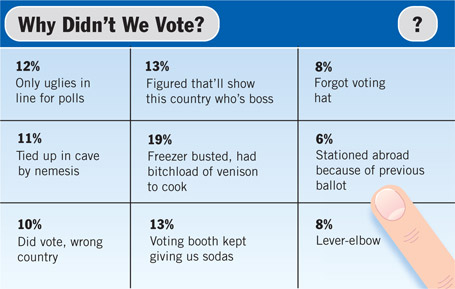
Why Didn't We Vote?

Some humor from The Onion


Instant Survey: Should the Oklahoma Legislature ban straight ticket voting?
What Do you think about Oklahoma’s health?

(Thanks to Cleveland County Democratic activist Tim Mauldin who sent this to me today. I hope that you will consider making recommendations.)

Do you think Oklahoma’s health and health care are in good shape? Penny Cockerell, a reporter for the Oklahoman wants to know. Please consider sending your thoughts and recommendations: pcockerell@oklahoman.com or call 405-760-0775.

Here are some points to be considered from the 2006 “State of the State’s Health” Report issued by the Oklahoma Dept. of Health
http://www.health.state.ok.us/board/state/SOSH06.pdf#page=25

• Oklahoma, with 26.1 percent of adults smoking, is third in the nation. The tobacco industry continues to pour billions of dollars into advertising their deadly products, and target those who are most vulnerable — our youth, our minority populations, and our poor…huge disparities exist in the percentage of smokers when comparing race, income, and education.

• Smoking causes more death and disability than any other preventable risk factor. When just looking at lung cancer…smoking results in thousands of Oklahomans dying prematurely each year.

• Unfortunately, many of these lung cancer deaths occur disproportionately among African Americans.

• Smoking also contributes to Oklahoma’s high rates of heart disease, stroke, bladder cancer, and emphysema.

• In Oklahoma, over $2 billion, or $600 per person, is spent each year for smoking-related direct medical care and lost productivity... Such an economic burden stifles growth in Oklahoma and prevents us from reaching our fullest potential.

• Over the past 10 years, it has become increasingly clear that America’s health care system cannot sustain itself. We have by far the most expensive health care system in the world, costing us this year $1.9 trillion or $5,700 per capita.

• The average expenditure for the 25 established market economies (EME), so identified by the World Bank, is about $2,600 per capita. Yet, by any measure of public health, we rank at or toward the bottom of that 25.

• The rising cost of health care combined with more and more people unable to afford health care insurance coverage is placing hundreds of thousands at risk due to lack of access to care.

• We are the only EME that does not guarantee some level of health care to all its children.

• Based on current figures, it is estimated that nearly 700,000 Oklahomans have no health insurance coverage. Such numbers place a huge burden on our health care system due to uncompensated care.

• Currently, every Oklahoman with health insurance coverage pays an additional $1,781 a year on their premium to help cover the medical expenses of state residents without coverage.

Stamping the Rooster

Democrats State Senator Kenneth Corn and State Senator Debbe Leftwich have both prefiled bills that would eliminate "straight party" voting. I haven't seen their proposals yet, have just read and heard about them so I will be eager to see how the measures would improve voter participation.

According to the Oklahoma State Election Board there were 197,185 Democrats who "stamped the rooster" --- voted straight party in the November General Election compared to 142,500 Republicans who voted straight party. To review the data county by county visit the Oklahoma State Election Board's website Results by County here.

A quick Google search of the topic reveals that the practice is popular in some states but is the subject of much discussion and it looks like it will get some debate this session in our state legislature. What do you think? Should Oklahoma keep straight party voting or abandon it?

Tuesday, November 28, 2006

Memorial Service for Keith Smith

The memorial service for activist Keith Smith will be at 2 p.m. Friday, December 1st on the 4th floor rotunda of the State Capitol.
Senate Watch '08

A recent posting on Daily Kos introduces possible candidates against Sen. Inhofe in '08. Read it here. Leading the pack are Democrats Gov. Brad Henry, Attorney General Drew Edmondson and Congressman Dan Boren. Also mentioned as a possibility is former Congressman Brad Carson. I've also heard Tulsa Mayor Kathy Taylor's name as a possible candidate.

Inhofe had an approval rating of 46% just after the election with 13% undecided. Track his approval here.

Read the blog devoted to exposing Jim "In Hot Water" Inhofe at http://jiminhotwater.blogspot.com.

It appears that Oklahoma could be "in play" in '08 with the right candidate and a strong campaign.

Monday, November 27, 2006

Constructive Criticism and A Most Excellent Slate in '08

I've previously asked readers to begin thinking about the '08 campaigns, local, state, and national. Below is a posting on presidential primary candidates; the underlying tone is important for all primaries; not just the presidential. This posting was referenced from one on the power of netroots bloggers. I'll post it separately.

(From DailyKos.com)

Democratic Ticket 2008: An Embarrassment of Riches
by Rob in Vermont

Jonathan Singer posted an article the other day called The Sorry Slate of Republican Presidential Candidates in which he opines that the GOP’s crop of 2008 candidates is perhaps the slimmest pickings for either party in the last 100 years.

But you know what? Here’s what really floats my boat: I’m not even thinking about how crappy their slate is – I’m thinking about how great our slate is!

Sure, we can all find flaws in candidates who aren’t our favorites, we can all prognosticate about “electability.” Of course we can - we’re all political junkies and it’s our nature to be rather cynical and jaded.

But just for a moment, put your cynicism on a shelf. Our 2008 field of potential candidates really is an embarrassment of riches. Just to name a few...

John Edwards – on humanitarian, moral leadership issues, he is riveting

Al Gore – on the subject of protecting our environment and the costs if we don't, he has no equal
Wes Clark – a tried and true expert on defense policy

Barack Obama – one of our country’s finest orators

Hillary Rodham Clinton – just considering the intellectual heftiness of a second Clinton presidency, after the unbearable lightness of a second Bush presidency - the Universe itself would be grateful for the restoration of cosmic balance.

Indeed, our roster is full of brainy wonks, each of whom is well able to speak knowledgably on complex domestic and foreign policy issues, each of whom would return intellectual credibility to the White House. I suspect being “brainy” will not be sneered at so much in ’08 the way it was in ’00 and ’04.

The 2006 election suggests that the electorate has finally begun to tire of ideologues who think with their intestines instead of their heads and who pull policy out of their behinds instead of listening to experts and viewing empirical evidence with an unbiased eye.

I hope that having such a high-quality field won't, perversely, lead to a greater-than-normal number of gratuitous potshots being taken by Democratic bloggers and diarists who can't stand to see attention being paid to someone who isn't their top choice, like this recent attack on Al Gore. I know politics “ain’t beanball” and “if you can’t take the heat” etc. But our candidates will receive more than enough unconstructive criticism from the GOPers and the media.

It doesn't take much effort to write a snotty post about why some Democrat, who isn't your favorite, shouldn't be anyone's favorite.

But here's my request (while I have you here with your jadedness sitting on that shelf): in the coming months, try to refrain from unconstructive criticism of potential Democratic presidential candidates. You can put your critical eye to so much better use by making the effort to offer criticism in a constructive way, with the goal being to help our candidates to become better candidates.

A great example of this are two articles by blogger Mik Moore on Barack Obama. In the first article, he writes very pointedly about what he finds wrong with Obama’s famous speech about faith and politics, and in the second article he writes about what he finds right about the speech. And here’s another good example (if I do say so myself) of constructive criticism.
OK, sermon over! I hadn't intended to write a diary about criticism.

I just wanted to yell CHEERS for our 2008 crop of potential Democratic presidential candidates. Because our slate is most excellent!!!

Sunday, November 26, 2006

State Vicechair

According to the Oklahoma Democratic Party Constitution and Bylaws the State Vicechair shall:

1) Preside at meetings when the chair is absent, is unable to preside and has
failed to designate a person to preside,
2) Act for the chair when the chair is absent,
3) Assist the chair with such tasks as the chair may direct,
4) Assist the chair in raising funds,
5) Assist the chair in training programs, seminars and workshops for
Democratic nominees for public office, Democratic Party officials and
Democratic campaign workers,
6) Be authorized to countersign with the chair all checks drawn on the
accounts of the Oklahoma Democratic Party.

State Chair Duties

According to the Oklahoma Democratic Party Constitution and Bylaws he State Chair shall:

1) Preside at the meetings of the State Convention and the State Central
Committee or designate a person to preside,
2) Be the sole spokesperson for the Democratic Party in the State unless he
or she nominates an individual to be the spokesperson for the Party and
that person is approved by the State Central Committee,
3) Be the chief executive and inspirational leader of the Oklahoma
Democratic Party,
4) Be responsible for interviewing and recruiting prospective candidates for
public offices in which there is no Democratic incumbent in consultation
with appropriate county and congressional district chairs,
5) Direct all fund raising efforts of the Democratic Party and assure that all
funds are deposited in accounts in the name of the Oklahoma Democratic
Party,
6) Disburse funds of the Party, reporting such disbursements to the State
Central Committee,
7) Countersign with one of the other State officers all checks drawn on the
accounts of the Oklahoma Democratic Party,
8) Coordinate Party activities with the elected Democratic leadership,
9) Be responsible for conducting workshops for Democratic nominees for
public office in such areas as campaign techniques, fundraising and
campaign contribution and election laws,
10) Be responsible for directing the biennial Party organizational meeting
process and the Presidential delegate selection process,
11) Be responsible for conducting workshops for Democratic Party officials
and campaign workers,
12) Be responsible for maintaining a State headquarters office,
13) Be responsible for hiring staff, and for appointing one person to be the
State Central Director with the advice and consent of the State Central
Committee. No individual may assume the title of State Central Director
for any purpose without such consent,
14) Call meetings of the State Central Committee at such times as the chair
deems appropriate,
15) Appoint the members of meeting committees with the approval of the
State Central Committee.
16) And in addition may appoint a convention secretary, sergeants-at-arms and
tally clerks for each convention that is called. The state party secretary
may be appointed as the convention secretary.

Oklahoma Contributors by Industry

Oil & Gas Industry Leads Oklahoma Contributors
The Oil & Gas industry was reported as Oklahoma's top contributor to federal campaigns this cycle followed by "retired", lawyers, health professionals, miscellaneous finance, and commercial banks. OpenSecrets.org reports the following for Oklahoma this cycle:


  • Oil & Gas $1,178,416

  • Retired $510,159

  • Lawyers/Law Firms $451,209

  • Health Professionals $398,695

  • Misc Finance $200,094

  • Commercial Banks $189,070

  • Misc Business $171,072

  • General Contractors $151,500

  • Real Estate $143,637

  • Misc Energy $127,610


Oklahoma Candidates Spend $30 Million

Oklahoma political candidates spent more than $30 million this campaign season. Advertising, consultants, mail, payroll, polling, travel, fundraising, unspecified, postage, and supplies are the top ten aggregate expenditure categories for Oklahoma political candidates this cycle according to a report in the Tulsa World today. $18.4 million went to advertising. To read the report click here.
County Matters in Campaign Finance

Oklahomans gave $8,003,326 toward federal races in 2006. Contributions to federal candidates came primarily from donors living in Oklahoma and Tulsa Counties with Cleveland, Garfield, Comanche, Pontotoc, Canadian, Carter, Pottawatomi, Payne, Creek, Kay, Jackson, Stephens, Muskogee and Rogers Counties all reporting more than $50,000 in contributions this election cycle.

Of the total given toward federal races $5,994,990 was given directly to federal candidates with the balance going to leadership PACs and independents.

Democrats living in Creek, Pittsburg, Muskogee, Woods, Pushmataha, Craig, Atoka, Adair, and McIntosh counties gave more than their Republican counterparts.

For more information about contributions by county go to http://www.opensecrets.org/states/county.asp?State=OK&Year=2006.

Wednesday, November 22, 2006

Special Comment: Bush in Vietnam

Keith Olbermann takes Bush to the woodshed in this Special Comment about Bush's visit to Vietnam and his avoidance of reality. See it here:
Women in the Legislature

In the 51st Oklahoma Legislature there will be 18 women serving; nine Republicans and nine Democrats. There will be 11 women serving in the House of Representatives and 7 women serving in the Senate. Thirty-four Democratic women filed for state office in 2006. The Oklahoma Democratic Party would like to double that number in 2008. We are now actively recruiting qualified women to file for public office in 2008, and we're looking for 68 women to step up and take the challenge of public service and leadership. Why is this important? Read the following article about why women matter in the legislature. Then make a decision to be one, find one or support one.

Do Women in Local, State, and National Legislative Bodies Matter?
A Definitive Yes Proves Three Decades of Research By Political Scientists
By Karen O'Connor
Director, Women & Politics Institute, American University

Political theorist Hannah Pitkin asserts that political representation "means acting in the interest of the represented, in a manner responsive to them."1 Political scientist Jane Mansbridge goes farther to note that descriptive representation enhances substantive representation. 2Some male legislators may seek to advance women's interests, and others may argue that all issues are women's issues. But, a large and important body of research by political scientists indicates that the presence of women in legislative bodies makes a significant difference not only in what gets discussed, but also in what kinds of legislation are advanced.
When Elizabeth Dole entered the Republican presidential primary for the 2000 election, her presence forced the other candidates to deal with issues of concern to women voters. Similarly, former U.S. Senator Carol Moseley-Braun's entrance into the race for the Democratic presidential nomination for 2004 already is being hailed because, as a woman, she will force the rest of the Democratic candidates to address women's issues seriously. It is one thing for all of the announced male candidates to appear together on the stage at NARAL Pro-Choice America's Roe v. Wade 30th Anniversary dinner to voice their support for reproductive rights; it is another when they are forced to deal with women's issues on a daily basis on the campaign trail.3 A women's presence in the race will do that in a way no ardently feminist man could.
The same phenomenon holds true in legislative bodies (as well as the courts). Simply put, more than three decades of rigorous scholarly inquiry leave no doubt that women in politics in general and women in elective office, in particular, make a difference in the lives of all women. They help "enact better policy for women," 4as well as affect the legislative bodies in which they serve.5
THE IMPACT OF WOMEN IN STATE AND LOCAL LEGISLATURES
Much of the early research on the impact of woman legislators was confined to analyses of state and local legislatures simply because there were insufficient numbers of women in the U.S. House or Senate to allow for any kind of exacting quantitative analysis. Research conducted at the state and local level, however, ultimately provided testable hypotheses to examine the impact of women in the House of Representatives. Among the key findings about the impact of women legislators in state and local governments are:
On the Issues
· Women conceptualize problems differently and are more likely to offer new solutions. 6
· Non-feminist women are more likely than non-feminist male colleagues to work on legislation affecting women. 7
· Women legislators of both parties are more likely to advance "women's issues," define women's issues more broadly than men, put them at the top of their legislative agendas, and to take a leadership role in those issue areas.8 This results in bills dealing with children, education, and health care becoming legislative priorities. 9
· Women are more likely to view crime as a societal, rather than individual problem.10
· Women legislators are more likely to make certain that their policy positions are translated into new programs to help women.11

Working for Their Constituents
· Women legislators receive more constituent casework requests than their male colleagues and are three times more likely to agree that they would do more if they had more staff.12
· Women not only are more responsive to constituent requests, they are more likely to be persistent in their follow through to get a favorable resolution for their constituents. 13
· Women legislators believe that they need to help other women transcend barriers to success. 14
In the Legislative Body
· Women view themselves as more prepared, more diligent, and more organized.15
· Women emphasize a "hands on" approach emphasizing collegiality and collaboration instead of a hierarchical "command" approach. 16
· Women rely on a wider range of individuals in formulating policy creating more sensitive and thoughtful policy making. 17
· Women who meet as a caucus are more likely to work on bills dealing with women's rights. 18
· First term women sponsor less legislation than their male counterparts, while more senior women offer more than their male counterparts. 19
· Female committee chairs use their positions to facilitate interaction among committee members rather than to control and direct the debate. This affects the behavior of witnesses and other committee members. 20
· In general, women-sponsored legislation has a slightly higher rate of passage.21 Particularly, women's priority bills on women's issues become law at a higher pass rate than men's. 22
· When women are less than 15 percent of the legislative body, their status constrains their behavior. 23
· States with the lowest percentage of women in their legislatures pass the lowest number of women's bills.24
· Men believe that women in the legislative body help sensitize them to women's issues.25
WOMEN IN CONGRESS: WHY DOES IT MATTER?
The findings of the researchers noted above provide conclusive proof of the impact that women have as state and local legislators. Of course, given the smaller number of women in Congress until late, many of their local and state-based studies cannot yet be replicated, particularly in the U.S. Senate. Still, all of the quantitative studies of women in the House of Representatives have reached the same conclusions about women in that body. As the late Congresswoman Patsy Mink (D-HI) noted: "I always felt that we [women] were serving a dual role in Congress, representing our own districts and, at the same time, having a voice to the concerns of the total population of women in the country."26 It is clear that the vast majority of women in the Congress feel this way. This sentiment is underscored by quantitative studies of women in Congress by political scientists who have found that:
On the Issues
· Women get women's issues on the agenda. 27
· Women widen the range of policy solutions proposed and frame the policy debate in different terms.28
· Congresswomen give more attention and support to women's issues than men, regardless of their party affiliation or ideology. 29
· Overwhelmingly, women members introduce most women's legislation. 30
· Women are more likely than men to co-sponsor legislation dealing with women's issues. 31
Women in the Institution
· Use the Congressional Caucus for Women's Issues to champion women's issues. 32
· Without Caucus initiatives, many women's policies would not have been enacted. 33
· Strategic positions by women legislators make the difference in drafting legislation and on the floor.34
· Women use their positions on committees to advance legislation benefiting women. 35
· Since 1992, women in the Senate have received less valuable committee assignments. 36
· Women continue to be overlooked for committee chairmanships. 37
· Women use conference committee assignments to advance and protect women's policy issues. 38
Thirty decades of methodologically sophisticated social science research proves women make a difference. The question now should be how to get more women elected to these positions.
Footnotes
1. The Concept of Representation (Berkeley: University of California Press, 1967).
2. "Should Blacks Represent Blacks and Women Represent Women? A Contingent 'Yes'," Journal of Politics 61 (1999): 628-57.
3. Research by political scientists, for example, has found that when Justice Sandra Day O'Connor took her place on the U.S. Supreme Court, all of the other justices' support of claims of sex discrimination rose significantly. Her presence in the room as the justices deliberated cases apparently made them more cognizant of, and less likely to sanction sex discrimination. Karen O'Connor and Jeffrey A. Segal, "The Supreme Court's Reaction to its First Female Member," Women & Politics 10 (1990): 95-104. Similarly Elaine Martin and Barry Pyle find that feminist judges are more likely to adopt a pro-woman position, which holds true for Democratic and Republican judges. "Gender and Racial Diversification of State Supreme Courts," Women & Politics 24 (2002): 35-52.
4. Amy Caizza, "Does Women's Representation in Elected Office Lead to Women-Friendly Policy?" Institute for Women's Policy Research, Research in Brief. IWPR Publication #1910.
5. Nancy Chodorow, The Reproduction of Mothering (Berkeley: University of California Press, 1999); and, Georgia Duerst-Lahti, "Knowing Congress as a Gendered Institution," in Cindy Simon Rosenthal, ed. Women Transforming Congress (Norman: University of Oklahoma Press, 2002).
6. Lyn Kathlene, "In a Different Voice: Women and the Policy Process," in Sue Thomas and Clyde Wilcox, eds. Women and Elective Office: Past, Present, and Future (Boulder, CO: Westview Press, 1999); Lyn Kathlene, "Words that Matter: Women's Voice and Institutional Bias in Public Policy Formation," in Susan J. Carroll, ed. The Impact of Women in Public Office (Bloomington, Indiana University Press, 2001); Marcia Whicker and Malcolm E. Jewell, "The Feminization of Leadership in State Legislatures," in Thomas and Wilcox, eds. Women and Elective Office; and, Cindy Simon Rosenthal, "Gender Styles in State Legislative Committees: Raising their Voices in Resolving Conflict," Women & Politics 21 (2000): 21-46.
7. Debra L. Dodson, "Acting for Women: Is What State Legislators Say What they Do?" in Carroll, ed. The Impact of Women in Public Office.
8. Janet Boles, "Local Elected Women and Policymaking: Movement Delegates or Feminist Trustees," in Carroll, ed. The Impact of Women in Public Office; Susan J. Carroll, "Representing Women: Women State Legislators as Agents of Policy-Related Change," in Carroll, ed. The Impact of Women in Public Office; Sue Thomas and Susan Welch, "The Impact of Gender on Activities and Priorities of State Legislators," Western Political Quarterly 44 (June 1991): 445-456; Sue Thomas, "Why Gender Matters: The Perceptions of Women Officeholders," Women & Politics 17 (1997): 27-54; Debra Dodson and Susan J. Carroll, "Reshaping the Agenda: Women in State Legislatures," (New Brunswick, NJ: Rutgers University, Center for American Women and Politics, 1991); Edith J. Barrett, "Gender and Race in the State House: The Legislative Experience," Social Science Journal 34 (1999): 134-44; Shelah Gilbert Leader, "The Policy Impact of Elected Women Officials," in L. Sandy Maisel and Joseph Cooper, eds. The Impact of the Electoral Process (Beverly Hills, CA: Sage, 1977); Thomas H. Little, Dana Dunn, and Rebecca Dean, "A View from the Top: Gender Differences in Legislative Priorities Among State Legislative Leaders," Women & Politics 22 (2001): 29-50; Beth Reingold, Representing Women: Sex, Gender, and Legislative Behavior in Arizona and California (Chapel Hill, University of North Carolina Press, 2000); Michelle A. Saint Germain, "Does their Difference Make a Difference?: The Impact of Women on Public Policy in the Arizona Legislatures," Social Science Quarterly 70 (1989): 956-968; and, Sue Thomas, How Women Legislate (New York: Oxford University Press, 1994).
9. Carroll, ed. The Impact of Women in Public Office; Joanne V. Hawks and Carolyn Ellis Staton, "On the Eve of Transition: Women in Southern Legislatures, 1946-1968," in Lois Lovelace Duke, ed. Women in Politics: Outsiders or Insiders (Englewood Cliffs, NJ: Prentice Hall, 1993); Jeanne J. Kirkpatrick, Political Women (New York, Basic Books, 1974); and, Lynne E. Ford and Kathleen Dolan, "Contemporary Women State Legislators: A Diverse Group With Diverse Agendas," in Lois Lovelace Duke, ed. Women in Politics: Outsiders or Insiders, 2nd ed. (Englewood Cliffs, NJ: Prentice Hall, 1996).
10. Lyn Kathlene, "Power and Influence in State Legislatures: The Interaction of Gender and Position in Committee Hearing Debates," American Political Science Review 88 (1994): 560-76.
11. Boles, "Local Elected Women."
12. Lilliard E. Richardson, Jr. and Patricia Freeman, "Gender Differences in Constituency Service Among State Legislators," Political Research Quarterly 48 (1995): 169-179.
13. Susan Abrams Beck, "Acting as Women: The Effects and Limitations of Gender in Local Governance," in Carroll, ed. The Impact of Women in Public Office.
14. Thomas, "Why Gender Matters."
15. Beck, "Acting as Women" and Thomas, "Why Gender Matters."
16. Cindy Simon Rosenthal, "Determinants of Collaborative Leadership: Civil Engagement, Gender or Organizational Norms?" Political Research Quarterly 51 (1998): 847-868.
17. Kathlene, "Power and Influence." Interestingly, the public also views women leaders as more organized (67%), communicative (65%), creative (62%), and people oriented (54%) than male leaders. Avon's Global Women's Survey, 2000. Janet Flammang also finds that women attribute their distinctive leadership styles to "an insistence upon mutual respect, consensus decision-making, validation of the feelings of others, and noncompetitive power." "Female Officials in the Feminist Capital: The Case of Santa Clara County," Western Political Quarterly 38 (1985): 94-118.
18. Thomas, How Women Legislate and Thomas and Welch, "The Impact of Women."
19. Kathlene, "Words that Matter."
20. Lyn Kathlene, "Power and Influence;" Sue Tolleson Rinehart, "Do Women Leaders Make a Difference? Substance, Style and Perceptions," in Debra Dodson, ed. Gender and Policy Making: Studies of Women in Office (New Brunswick, NJ: Center for American Women and Politics, 1991); Whicker and Jewell, "The Feminization of Leadership in State Legislatures;" and, Cindy Simon Rosenthal, "Getting Things Done: Women Committee Chairpersons in State Legislatures," in Thomas and Wilcox, eds. Women and Elective Office.
21. Mark Ellickson and Donald Whistler, "A Path Analysis of Legislative Success in Professional and Citizens Legislatures: A Gender Comparison," Women & Politics 21 (2000): 77-103.
22. Sue Thomas and Susan Welch, "The Impact of Women in State Legislatures: Numerical and Organizational Strength," in Carroll, ed. The Impact of Women in Public Office.
23. Rosabeth Moss Kanter, Men and Women of the Corporation (New York, Basic Books, 1977).
24. Thomas and Welch, "The Impact of Women."
25. Boles, "Local Elected Women."
26. Fern S. Ingersoll, "Former Congresswomen Look Back," in Irene Tinker, ed. Women in Washington: Advocates for Policy Change (Beverly Hills, CA: Sage, 1983).
27. Christina Wolbrecht, The Politics of Women's Rights (Princeton, NJ: Princeton University Press, 2000); Debra Dodson, et al. Voices, Views, Votes: the Impact of Women in the 103rd Congress (New Brunswick, NJ: Center for American Women and Politics, 1995); Kathleen Frankovic, "Sex and Voting in the U.S. House of Representatives," American Politics Quarterly 5 (1977): 315-330; Nancy E. McGlen, et al. Women, Politics, and American Society, 3rd ed. (New York: Longman, 2002); and, Barbara Burrell, A Woman's Place is in the House: Campaigning for Congress in the Feminist Era (Ann Arbor: University of Michigan Press, 1994).
28. Wolbrecht, The Politics of Women's Rights; and, Dena Levy, Charles Tien, and Rachelle Aved, "Do Differences Matter? Women Members of Congress and the Hyde Amendment," in Karen O'Connor, ed. Women and Congress: Running, Winning, and Ruling (New York: Haworth Press, 2002).
29. Julie Dolan, "Support for Women's Interests in the 103rd Congress: The Distinct Impact of Congressional Women," Women & Politics 18 (1997): 81-93; Raymond Tatlovich and David Sheier, "The Persistence of Ideological Cleavage in Voting on Abortion Legislation in the House of Representatives, 1973-1988," American Politics Quarterly 21 (1993): 125-139; Wolbrecht, The Politics of Women's Rights; Frieda L. Gehlen, "Women Members of Congress: A Distinctive Role," in Marianne Githens and Jewell Prestage, eds. A Portrait of Marginality: the Political Behavior of American Women (New York: David McKay, 1977); Leader, "The Policy Impact;" Janet Clark, "Women at the National Level," in Thomas and Wilcox, eds. Women and Elective Office; and, Michele Swers, "Are Congresswoman More Likely to Vote for Women's Issue Bills Than Their Male Colleagues?" Legislative Studies Quarterly 23 (1998): 435-448.
30. Wolbrecht, The Politics of Women's Rights, and; Michele Swers, The Difference Women Make: The Policy Impact of Women in Congress (Chicago: University of Chicago Press, 2002).
31. Karen O'Connor, "Thirteen and Counting (and Making a Difference): Women in the U.S. Senate," Journal of Women's Imaging (November 2001): 119-122; Wolbrecht, The Politics of Women's Rights; Karin Tamerius, "Sex, Gender, and Leadership in the Representation of Women," in Georgia Duerst-Lahti and Rita Mae Kelly, eds. Gender, Power, Leadership, and Governance (Ann Arbor: University of Michigan, 1995); Katherine Cramer Walsh, "Enlarging Representation: Women Bringing Marginalized Perspectives to Floor Debate in the House of Representatives," in Rosenthal, ed. Women Transforming Congress; and, Swers, The Difference Women Make.
32. Irwin Gertzog, Congressional Women: Their Recruitment, Integration, and Behavior, 2nd ed. (Westport, CT: Praeger, 1995); and, Dodson, et al. Voices, Views, Votes.
33. Debra Dodson, "Representing Women's Interests in the U.S. House of Representatives," in Thomas and Wilcox, eds. Women and Elective Office.
34. Swers, The Difference Women Make; and, Noelle H. Norton, "Transforming Policy from the Inside: Participation in Committee," in Rosenthal, ed. Women Transforming Congress.
35. McGlen, et al. Women, Politics, and American Society.
36. Laura W. Arnold and Barbara M. King, "Women, Committees, and Institutional Change in the Senate," in Rosenthal, ed. Women Transforming Congress.
37. Arnold and King, "Women, Committees, and Institutional Change."
38. Norton, "Transforming Policy from the Inside;" and, Richard L. Hall, Participation in Congress (New Haven, CT: Yale University Press, 1996).
The Women & Politics Institute is dedicated to advancing the study and discussion of women and politics, promoting opportunities for women in politics, and training young women to become political leaders: http://www.american.edu/oconnor/wandp/

Tuesday, November 21, 2006

Oklahoma Elects Democratic Women

Nationally, the 2006 election is being heralded as the “Year of the Woman,” and Oklahoma is no different. On November 7, 2006, Oklahoma voters sent several women into public office, and we want to thank the wonderful women Democratic candidates with whom we got to work.

At the statewide level, we elected:
Jari Askins, Lieutenant Governor
(The first Democratic woman to hold this post in Oklahoma.)
Sandy Garrett, Superintendent of Public Instruction*
Kim Holland, Insurance Commissioner*

In the State Senate and State House of Representatives, we elected:
Mary Easley, SD 18*
Connie Johnson, SD 48*
Jeannie McDaniel, HD 78
Rebecca Hamilton, HD 89*
Anastasia Pittman, HD 99

These offices are especially important to us as Democrats, because victory at the state legislative level helps us build the groundwork to win at many other levels, and maintain long-term Democratic success.

Thanks again to all of our women voters and women candidates – and congratulations to our women winners!

*Indicates incumbency

Local Democratic Activist Finishes Last Campaign

Local Democratic activist and lobbyist Keith Smith died Monday, November 20, 2006 in Oklahoma City. He was actively involved in this year's Democratic campaigns; in particular the defeat of Republican nemesis Thad Balkman. Smith was a Yellow Dog Democrat who lobbied for the Sierra Club and Planned Parenthood. He was a compassionate and tireless advocate for civil rights in Oklahoma. Smith was an avid OSU fan. He will be missed by many friends and family members.

Senator Tom Ivester

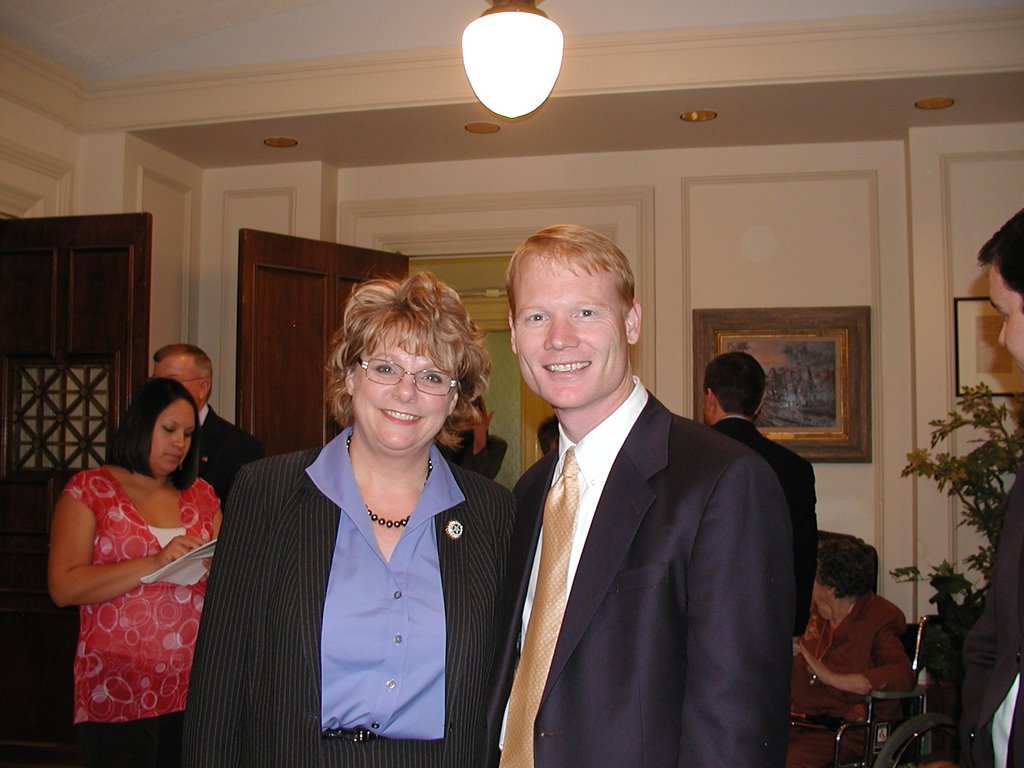
Tom Ivester, SD 26, is one of Oklahoma's newest Democratic State Senators. I grew up in SD 26, "shortgrass country" in southwest Oklahoma, and my parents still farm out there. I met Ivester early last spring and visited with him and met his family again at the Mtn. View Gotebo Fair in August. I knew then what a dedicated representative of the people and for the people he would be and was proud to see him sworn in last week. (We are pictured at right at the reception in the Senate Lounge following the swearing in ceremony.)

He is a Major in the U.S. Army Reserves who recently returned from duty in Afghanistan. The new Senator practices law in Elk City and Sayre. Ivester's family is not new to the state capitol, his grandfather held the same Senate seat more than 70 years ago and the Ivesters have been active community members for generations.

Congratulations Senator Ivester!

Monday, November 20, 2006

2008 Oklahoma Legislative Term Limits

House Democrats who will be term limited in 2008 include:
  • David Braddock, HD 52
  • James Covey, HD 57
  • Darrell Gilbert, HD 72
  • Al Lindley, HD 93
  • Ray McCarter, HD 51
  • Dale Turner, HD 24
Senate Democrats who will be term limited in 2008 include:
  • Mike Morgan, SD 21
  • Jeff Rabon, SD 5
House Republicans who will be term limited in 2008 include:
  • Terry Ingmire, HD 34
  • Mike Wilt, HD 11
Senate Republicans who will be term limited in 2008 include:
  • Owen Laughlin, SD 27
  • Kathleen Wilcoxson, SD 45,
  • Jim Williamson, SD 35

Friday, November 17, 2006


Senator Gumm’s “Senate Minute” Column
for November 17-23, 2006

DURANT, Okla. – Hello again, everybody! Let me begin this week’s column by wishing you and yours a very happy Thanksgiving holiday.
As our nation pauses to give thanks to Almighty God for the many blessings He has bestowed on us, I remember the closing words of President John F. Kennedy’s inaugural address. “Here on Earth, God’s work must surely be our own.”
Those words are among the statements that eloquently embody the spirit of our nation and our state. The challenge of those words was reminded to us by column written by U.S. Sen.-elect Jim Webb of Virginia.
Writing in The Wall Street Journal, Senator Webb began with a statement with which I deeply agree: “The most important – and unfortunately the least debated – issue in politics today is our society’s steady drift toward a class-based system, the likes of which we have not seen since the 19th century.”

While corporate executives send American jobs overseas, they are compensated at an incredible rate. Making it worse, some support a tax policy that would make this divide greater, giving larger tax cuts to the wealthy than the rest of us. I strongly disagree.

That is why during my two years as chair of the Senate Finance Committee, I fought efforts to give smaller tax cuts to working Oklahomans. Because the Senate held firm on this point, every Oklahoman benefits from the tax cuts we passed, not just the wealthy.

Compounding the problem are the challenges facing working families in this new century. Cheap labor overseas and the “vast underground labor pool” from illegal immigration are helping squeeze working Oklahomans.

The way to stop illegal immigration is to dry up jobs for illegal immigrants by punishing companies that knowingly hire illegal immigrants. Just as serious as illegal immigration is the legal out-migration of American jobs to countries with cheap labor. Our area suffered the loss of manufacturing jobs at Wrangler in Coalgate and, more recently, Ethan Allen in Atoka.

Some politicians try to make political hay out of this, but the truth is nothing state government could do attracts the eye of some corporate executives like ridiculously cheap labor.

Short-sighted executives see cheap labor overseas as the key to more profits.
Congress should use tax policy to punish companies that export American jobs. State government should step in as well, but our reach extends only to Oklahoma’s state lines. The federal government can punish any American company that turns its back on American workers.

Every American, every Oklahoman – regardless of whether they are born to wealth – deserves the chance to reach their potential. We should put a high value work; Americans who work hard and play by the rules should be able to earn enough to support their families.

As we give thanks this holiday, may we rededicate ourselves to the notion that every American deserves the chance to enjoy the full bounty of our blessings. Here on Earth, that is surely God’s work, and nothing is more “American” than that.

Thanks again for reading the “Senate Minute.” Have a happy Thanksgiving and may God bless you all.

Thursday, November 16, 2006

New Democratic Legislators Sworn in Today


Wednesday, November 15, 2006

Six New Democratic State Senators to Take Oath of Office on Statehood Day

Six new Democratic state senators will be sworn into office on Thursday, November 16, 2006, in the Senate chamber of the State Capitol. The Honorable Joseph M. Watt, Chief Justice of the Supreme Court, will administer the oath of office on the 99th anniversary of Oklahoma’s statehood.


“As we head into our centennial year, it seems very appropriate that the first official act of this body, taking the solemn oath of office, will take place on Statehood Day,” said Sen. President Pro Tempore Mike Morgan, D-Stillwater. “We are making history as we prepare to lay the foundation for Oklahoma’s next 100 years.”

Newly elected members taking the oath of office include Sean Burrage, D-Claremore; Roger Ballenger, D-Okmulgee; Joe Sweeden, D-Pawhuska; John Sparks, D-Norman; Tom Ivester, D-Elk City; and Andrew Rice, D-Oklahoma City.

The visitor’s gallery of the Senate chamber will be open to family, friends, supporters and other members of the public who wish to attend. Streaming video and audio of the ceremony will also be available on the Senate website at www.oksenate.gov.

Tuesday, November 14, 2006

The Blue Surge Happened! Don't Ignore the Opportunity

(I enjoy reading E.J. Dionne and this morning's piece on the recent elections is no exception. Given that Oklahoma is considered a red state and elected Democrats to 8 of 9 statewide offices the lessons learned about the voters and the political landscape are worth reading. As we move forward as a party organization and as a state we need to seriously consider his closing line. Read it below.)

Democrats' Real VictorySelf-Deluding Spin on Both Sides
By E. J. Dionne Jr.Tuesday, November 14, 2006; A31

LITTLE ROCK -- Elections provoke myth-spinning. Republicans are in danger of spinning away from a full appreciation of the magnitude of their defeat last week. Democrats could spin themselves into useless arguments rooted in the past and ignore the opportunity American voters have offered them.

Some Republicans, including President Bush's political architect, Karl Rove, are trying to say that Tuesday's vote was no big deal. Democratic gains were at or below the incumbent party's usual losses in the sixth year of a presidency, and anyway many of the Democrats elected this year are "conservative."

Republicans believe this spin at their peril.

Many who play down the Democratic gains are the very same people who said six months ago that the Democrats had no chance of winning either the House or Senate. Incumbent-friendly congressional boundaries and the fact that many of the House and Senate seats Democrats needed to win were in previously pro-Bush areas meant Democrats needed a big and unlikely surge.

The surge happened. Votes are still being tallied, but it appears that the Democrats emerged with at least as large a margin in the popular vote in this year's House races as Bush enjoyed in winning two years ago. If Rove could claim that Bush's narrow majority was part of a "rolling realignment" to the Republicans, why is a comparable majority the other way insignificant? Democrats, by the way, also have an estimated 11 percent lead in the vote totals for Senate races and a 7 percent lead in governors' contests. (Remember, we could have a U.S. Senate race in 2008 in Oklahoma and our Governor won 74 of 77 counties with 63% of the vote.)

The notion that this election produced a different kind of "conservative" majority is simply wrong. Yes, Democrats won in part by nominating moderate candidates in moderate areas. But every newly elected Democrat was, by any fair reckoning, somewhere to the left of the vanquished Republican, especially on Iraq and economic issues.

Moreover, voters on Tuesday sent to Congress a pack of unapologetic progressives, including Sherrod Brown of Ohio and Bernie Sanders of Vermont in the Senate, and such new House members as John Yarmuth of Kentucky, Carol Shea-Porter in New Hampshire and Dave Loebsack in Iowa, among many others.

Some Republicans say that Sen. Joe Lieberman's reelection as an independent suggests that rejection of Bush's Iraq policies was not, to use Rove's word, the "determining" factor in the election. But exit polls make clear that Lieberman won despite his support for the war, not because of it.

Connecticut voters disapproved of the war by a margin of two to one, and nearly two-thirds favored withdrawing some or all of our troops. Lieberman, who enjoyed residual affection among Connecticut Democrats, managed to carry close to 40 percent of the vote among those who favored troop withdrawals, including a remarkable 29 percent among those who favor withdrawing all our troops.

Republicans make a mistake if they dismiss the depth of the Democratic victory and the disintegration of their coalition. Democrats now control 28 of the 50 governorships, many of them in previously red states such as Arkansas, and they picked up legislative chambers in seven states.

Democrats converted one-time Bush voters in large numbers and cut into core Republican constituencies. As the National Journal's Tom Edsall has pointed out, Republicans lost ground among white men, married people and religious voters. Nationwide, one of every seven Bush voters from 2004 backed a Democratic House candidate. In Ohio, Brown won 20 percent of those who voted for Bush two years ago; in Montana, Democrat Jon Tester won 18 percent of the Bush voters. In the Ohio governor's race, Ted Strickland, the winning Democrat, won 30 percent of Bush supporters from 2004.

But victory has not prevented the revival of what feels like an ancient feud between Democratic centrists, who are emphasizing the importance of moderate voters in Tuesday's results, and those on the party's left who point to the centrality of economic populism and impatience with the Iraq war.

To which the only rational response is: Stop! Moderates were indeed central to the Democrats' triumph, because Republicans vacated the political center. But these are angry moderates. Many are unhappy about Iraq, less on ideological grounds than because the Bush policy is such an obvious failure. The new Democratic voters are a mix of social conservatives (especially in the South and parts of the Midwest such as Indiana) and social libertarians (especially in the West). Many (especially in the Midwest) are angry about the flight of manufacturing jobs overseas.

Holding this coalition together will require subtlety and an acknowledgment that the comfortable old battles of the 1980s and '90s are irrelevant to 2006 and 2008. The old arrangements are dead, a truth that both parties need to recognize.

What then, will we do in Oklahoma? How do we lead and how do we capture more seats for the people? Let us know your ideas for creating a progressive future for Oklahoma. Email me at lisapryor@okdemocrats.org.


Distinguished Lecturer Series

Last night I had the pleasure of speaking on the campus of Southeastern Oklahoma State University as part of the Distinguished Lecturer Series associated with the Aspects of State Government class.

The class is taught by former Oklahoma Speaker of the House, now SOSU President Dr. Glen Johnson, Dr. Richard Pearlstein, and Dr. Chummei Yoe. Dr. Johnson will be inducted into the Oklahoma Hall of Fame Thursday night in Tulsa.

I had been scheduled to speak in the 7 p.m. slot following Oklahoma House Speaker Elect Lance Cargill but he was running late so I spoke at 5:30 p.m. and he at 7 p.m. Apparently GOP Chairman Tom Daxon was unable to participate in the series.

As a former teacher it's always great to be back in an academic setting and last night combining education and politics was about as good as it gets for me! Thanks Dr. Johnson for the opportunity to visit your campus and meet your students and staff!

Sunday, November 12, 2006

Oklahoma Democratic Party Elections

It's time to think about precinct meetings, county conventions, district conventions, and our state convention.

Check out the ODP Constitution and By-laws on our website by clicking on the words ODP Constitution and By-laws here. Read the sections related to elections and then make a commitment to get involved inthe party process from your own precinct. You'll be glad that you did.

Precinct officers become delegates to the county convention where county officers and state delegates are elected. The county officers and delegates attend a district convention where district officers are elected before the state convention which will be Saturday, May 19, 2007 in Oklahoma City. State officers are elected at the convention and resolutions recommended by the district conventions are considered for adoption by the state delegates.

If you really want to make a difference in your party, get involved and stay involved. We know that in 2004 if we had earned the votes of 10 more people in every precinct Bush would not have won. Can you find new votes in your precinct? If you can, then you can make a difference. We have 2244 precincts in Oklahoma. To be successful in 2008 we must fill every office in every precinct. That means we need YOU. And we need thousands of other dedicated Democrats to help us elect a President, a U.S. Senator, and new state legislators. We need thousands of dedicated Democrats to mobilize to elect Democrats to the county courthouses, to local school boards, and to city councils.

But if you do get involved, understand that you have a responsibility to the men and women who run for office in your community, in your county, in your legislative district, in your state, and in your country. You have a responsibility to support them with your time and talent. You have a responsibility to support them with your money.

And if you are a party officer you have a responsibility to support the local and state party. There are plenty of opportunities to support the party. Check out the ODP's Yellow Dog Democrat Club. Check out the Rooster Club.

If you have ideas about strengthening the party share them with us at the ODP. We are open to new ideas and new people. We look forward to working with you to elect more Democrats than ever in 2008!

Thanks for all you do for Democrats!
Lisa Pryor, Chairman

Presidential Picks for 2008

A quick review of the Sunday talk shows indicates that the race for 2008 began in earnest on November 8th. Who are your picks for president in 2008? Who will best represent Oklahomans and who can win in November?

In the 2004 Presidential Primary Oklahoma picked General Wesley Clark followed by Senator John Edwards; leaving the eventual nominee John Kerry behind but well ahead of Governor Howard Dean. So Oklahoma, who will it be in 2008?

Rumored or confirmed possibilities include: Biden, Bayh, Vilsack, Gore, Clark, Kerry, Richardson and Clinton. Who will it be for you?

50 State Strategy -
Oklahoma

There's been a considerable amount of talk about the DNC's 50 State Strategy in national and local venues. In Oklahoma the strategy allowed us to work for the last 72 weeks on a 72-hour plan that resulted in winning eight of nine statewide offices for Democrats.

Thanks to Oklahoma's DNC Partnership Project staff members Jason McCarty, Communications Directo; Teresa Hill, Outreach Organizer; and Courtney Ruark, Outreach Organizer. All three are Oklahomans who've been working directly with local, county, and state Democrats this cycle to improve turnout and election results.

The Partnership Project, also referred to as the 50 State Strategy, is a key tactic for Democratic success this cycle and for 2008. By fielding a fulltime staff throughout the year the state party is able to develop infrastructure and to enahnce traditional networks while reaching out to new constituencies to build a healthy, innovative party that can support campaigns at the local, county, and state level.

As State Party Chair I am grateful for the investment in our Party by the DNC and look forward to electing more Democrats in Oklahoma and in America as a result of this strategy.

If you want to be part of the new Democratic Party, of a new direction in America, then contact us today. The race for the White House began on Tuesday, and we are already talking to Oklahomans about running for state legislative positions in 2008. If you've ever considered being a candidate or working on a campaign, please talk to our staff or call me at the ODP. We are there to serve Oklahoma's million -- and you are one of a million --- we're counting on you to help us further implement the 50 State Strategy through your involvement at the precinct, county, district, and state levels.

Lisa Pryor, Chairman
chair@okdemocrats.org

Friday, November 10, 2006

Democrats - Promise Keepers
Chairman's Comments on Veteran's Day


Washington, DC - Democratic National Committee Chairman Howard Dean today issued the following statement commemorating Veteran's Day:

"Today, Americans are united in honoring the almost 27 million veterans of our country's Armed Forces. For generations, Americans of all backgrounds, from all across the country have answered the call to service. They and their families have made great sacrifices in defense of our freedoms, serving with honor and distinction. This year's commemoration, like others in recent years, takes on added significance, as our nation continues to ask so much of the brave men and women serving in Iraq and Afghanistan. They have answered the call, displaying great skill and courage, and demonstrating a commitment to American that makes us all proud. We are all deeply indebted to them, and the brave soldiers who have served before them.

"This Veteran's Day follows the end of an historic election season. The American people sent a clear message for a new direction by electing strong Democratic veterans like Jim Webb in Virginia, Tim Walz in Minnesota, and Admiral Joe Sestak, Patrick Murphy and Chris Carney in Pennsylvania to Congress. In doing so, they voted for hope and opportunity over fear and smear. They voted for change and accountability, not the White House's full-speed ahead commitment to a failed strategy in Iraq. And they voted to keep our promise to the brave men and women who have given so much in defense of our freedoms, asking only that their government keep its promise to take care of them when their service was done.

"For too long, the Republican Congress and the Bush Administration have failed to keep that promise. When Democrats take control of Congress, we will offer America's veterans and military families a renewed commitment to fully fund veterans health care, expediting the processing of benefits claims, and providing affordable health insurance to thousands of members of the Guard and Reserve by providing them full TRICARE benefits. After giving so much in serving our nation, this is the least we can offer in return.

"Democrats stand ready to lead. Together, we will make America stronger, and move America in a new direction - one that keeps our promise to the men and women who have served our nation."

Veterans Day events start Friday in state

By Brian Sargent
The Oklahoman

Armistice Day -- known now as Veterans Day -- was first observed 87 years ago.

The 45th Infantry Division Museum has celebrated Veterans Day every year since the U.S. bicentennial in 1976.

Ceremonies begin at 10 a.m. Friday at the museum at 2145 NE 36. The museum will be open until 4:15 p.m. Friday and from 10 a.m. to 4:15 p.m. Saturday. All events are free.

Friday's ceremony begins with an Oklahoma Army National Guard flyover. World War II soldier re-enactors will fire an M337 tank gun. About 20 organizations will participate in the massing of the colors.

Veterans Day "means that the public has not forgotten them or their comrades who have not left the battlefield. It's that simple," museum curator Michael E. Gonzales said.

Members of Bugles Across America will perform Saturday at Oklahoma's two national cemeteries. Bugles Across America provides live buglers for sounding taps whenever needed.

Taps will be played beginning at 9 a.m. at Fort Sill National Cemetery. No speakers are scheduled.

At Fort Gibson National Cemetery in Fort Gibson, ceremonies begin at 11 a.m. Along with buglers, bagpipers are scheduled to perform.

Rep. Jerry McPeak, D-Warner, will serve as master of ceremonies at Fort Gibson. Sen. Earl Garrison, D-Muskogee, also will speak.

"We encourage family members and veterans to attend to remember those who have served their country and have been buried here because of their honorable service," said Bill Isbell, program assistant for Fort Gibson National Cemetery.

Other observations

A Veterans Day parade, part of Oklahoma's Centennial kickoff, winds through downtown Tulsa beginning at noon Friday. "Welcome Home" is the theme. The mile-long parade is organized by American Legion Post No. 1 in Tulsa. Organizers expect about 200 organizations to participate, including the Oklahoma Centennial All*Star Band and about a dozen bands from high schools in the Tulsa area.

Free admission will be offered Saturday for veterans and active-duty military personnel visiting the Oklahoma History Center, 2401 N Laird Ave. in Oklahoma City. The museum will be open 9 a.m. to 5 p.m. on Veterans Day. A special exhibit focuses on Choctaw and Comanche Indians from Oklahoma who served as code talkers for the U.S. Army in World Wars I and II. A companion exhibit prepared by the Smithsonian Institution takes a larger look at Indian code talkers from across the United States. The exhibits remain on display through Jan. 15.

Golden Corral restaurants will offer free meals to veterans and active-duty military personnel from 5 to 9 p.m. Monday. The Disabled American Veterans will have information tables at each restaurant to answer questions about their transportation program and membership requirements. They also will accept donations.

Federal, state and county offices will be closed Friday in observance of the holiday. Post offices will be open Friday and the U.S. Postal Service will deliver mail. Saturday, post offices will be closed and mail will not be delivered.

The Metropolitan Library System and Pioneer Library System will be open Saturday, and Oklahoma City's Metro Transit bus service will run.

Thursday, November 09, 2006

A New Direction is Here


The American people spoke loud and clear. They want a change, and they want Democrats to lead America in a new direction.

Democrats won an unprecedented majority because we are on the side of the American people.

In Iraq and here at home, it is time for a change. Americans want, they deserve, and they are going to get:

- A new direction in Iraq
- Better jobs at better pay
- Energy independence
- Affordable health care
- Affordable education
- A secure retirement

The days of the Do Nothing Congress are over. Democrats are ready to get to work.

It is time to put aside partisanship. Congress must honor America's choice with a new beginning. We must work together to move America forward.

Wednesday, November 08, 2006

How It Feels

As a young voter, I've been trying to articulate to my friends and family just how it felt to win locally and nationally last night. Not just to feel victory in a race, but to feel like my hard work for the issues I believe in actually meant something. That I was actually part of change...

And then I found this on DailyKos, and it is much more eloquent than I can be:


The Newbie by Georgia10

Exhale. We won.

"We won." Truth be told, it's a concept that I have yet to fully register. You see, at 24 years old, such victories are completely foreign to me.

Millions of young Americans who grew up (politically) at the turn of the millennium are tasting their first victory today. We grew up in the aftermath of the Republican Revolution, not understanding what was so revolutionary about it. For us, a Republican Congress and Senate have basically been the status quo. We have no real memories of the pre-Gingrich political environment.


Often, I'll read or hear from those far wiser than me about their lifetime experiences. Anecdotes about Bobby Kennedy, tales of successful protest, and other memories borne out of a time when leaders led and common action produced tangible result. For years, I hungrily absorbed these stories, wishing that I was born in a different era where people still believed in the awesome power of the common citizen. Longing to experience government with a capital "G", an institution capable of remarkable social change.

I've grown up surrounded by disillusionment with that idea of government. I have vague memories of Clinton's impeachment, clearer memories of the 2000 election debacle, and an still-too-painful recollection of Kerry's loss. I've lived about one-fourth of my life under the presidency of George W. Bush. How's that for disillusionment?

As I matured, from a curious 18-year-old voter to a 24-year-old political junkie, my disillusionment grew. You know how it is. The outrages pile on day after day, and you feel like it's gotten to the point that there's no way this country can dig itself out of the rubble.

The darker it became, the more fervently I searched for light. A passionate speech here (Keith Olbermann), a TV smackdown there (Howard Dean). They have been sporadic twinklings of hope, but too far and few between to satisfy.

I'm used to losing, and I'm used to consolation prizes rendered in the form of moral victories and close calls.

But this--victory--is entirely foreign to me.

It's a strange feeling, one best described as a mix of ticklish heart and nervousness. I've moved on past disbelief to a sort of quiet contemplation on the length of the path before us. It's a long road towards real change, and my feet at slightly hesitant as we begin the walk. Perhaps those who have experienced victory before are more surefooted, steadied by the memories of previous Democratic majorities. We've been here before.

But here is not the here of the past. The path to implementing our agenda is booby-trapped by a right-wing intent on minimizing our majority status, and the media of today is not the media of past Democratic majorities.

So pardon the anxiousness of young voter who, in this Majority, feels like a citizen in a strange land. This crown of laurels feels a bit awkward on a head which has hung so low for so long.

I've never had victory open the floodgates of hope. I've never seen the stars so bright and shiny, or the path towards real change so well-lit. It's exhilarating. It's intimidating. It's brand new, and overdue.

To those celebrating their first victory today, and to those who have seen victory and taste it again tonight... congratulations. Our party has won, and our work has just begun.


National Headlines

Democratic Majority

Speaker Pelosi

Democratic Majority

Senator Claire McCaskill

Senator Jon Tester

A New Direction for America

Rumsfeld Resigns

Hastert Won't Seek Leadership Position
Civility and Solutions

Last night's elections showed that the American people want change and that they have put their faith in Democrats to bring change to Washington.

This was not just a victory for a party, it is an opportunity for our country. An opportunity to clean up the problems in Washington so we can get back to fixing the problems of every day Americans - crushing health care costs, high tuition, stagnant wages, and our dependence on foreign oil.

Americans also said loud and clear that they will not accept the same failed course in Iraq - they went full-speed ahead to the polls to vote for an end to the full-speed ahead strategy of this White House.

Democrats are eager to put the long-term interests of our country ahead of the constant effort to seek political advantage. We will work together with our Republican friends to bring change to Washington and results to the American people.

It's time to reach across the partisan divide, set aside the bitterness of the past few years, and give America a government based on civility and solutions.

Democrats Win Big Nationally!

Election Day turned out to be a great day for Democrats! We have taken back the U.S. House of Representatives and are on the verge of gaining the majority in the Senate. Check out the results here.
We WON!!!!!!!!! Big WINS!!!!

Congratulations to all of the candidates, their families, their campaign staff and volunteers and to all of the Oklahoma voters. Thanks to all of the volunteers at the ODP. Thank you ALL!

I'm still watching the results at home, it's 1:30 a.m. and it looks like the Democrats will take the U.S. House AND the U.S. Senate.

Tuesday, November 07, 2006


Let Us Know How it Goes At the Polls

Please post a comment here.

If you run into any trouble voting at your polling place or have any other voting questions, please do not hesitate to call us at 405-427-3366, or follow this link to find the phone number for your local election board.
SIGNS

Help us celebrate a great election night, and bring all the Democratic yard signs from your neighborhood to our office tomorrow at 1 pm.

We look forward to seeing you at 41st & Lincoln!
After Midnight Repetitive Robo Calls

We've had a number of calls about repetitive robo-calls made after midnight. These calls are likely from an Automatic Dialing Device and could be a violation of the Democratic process and a violation of applicable law.

We need your help to trace these calls.

If you receive such a call, please:

1. Utilize caller id to capture the telephone number.

2. Note the date, time and telephone number upon which the call was received.

3. Call the local office of your telephone company and advise them that you received such a call, the date, time and number called.

4. Call 1-405-427-3366 with your information or leave your information on our voice mail system. You can also email the information to chair@okdemocrats.org.

5. Record the call if possible.

6. Please report any and all calls. We need all your information to determine geographic patterns and other demographics. We intend to investigate and if possible cause prosecution of all persons who are involved in this corrupt practice.


Thank you for your help.
Election Turnout Growing

Reports here are that we are having a strong turnout. We've been monitoring turnout across the state today and have heard larger than expected numbers at midday.

WE'll be blogging from the watch parties tonight so stay tuned.